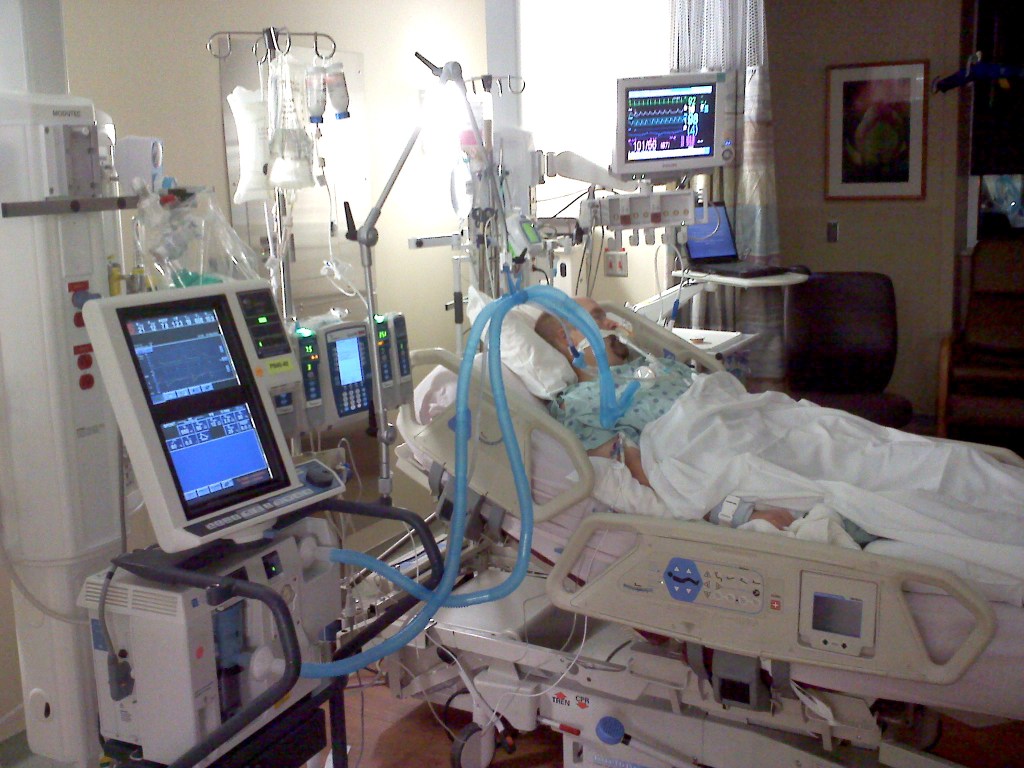
In 2010 I had a bout with Guillain–Barré syndrome. In less than one week I went from healthy to total paralysis and respiratory failure. Without medical intervention I would have died, but just 5 weeks later that I was out of the hospital. I needed a walker to get around safely, or later on a cane, but in 2016, after 6 years of physical therapy, I finally got to the point where I could walk safely without a walker or cane. It hasn’t been easy — I think I deserve a medal — but I beat it. Here’s my story.
Community
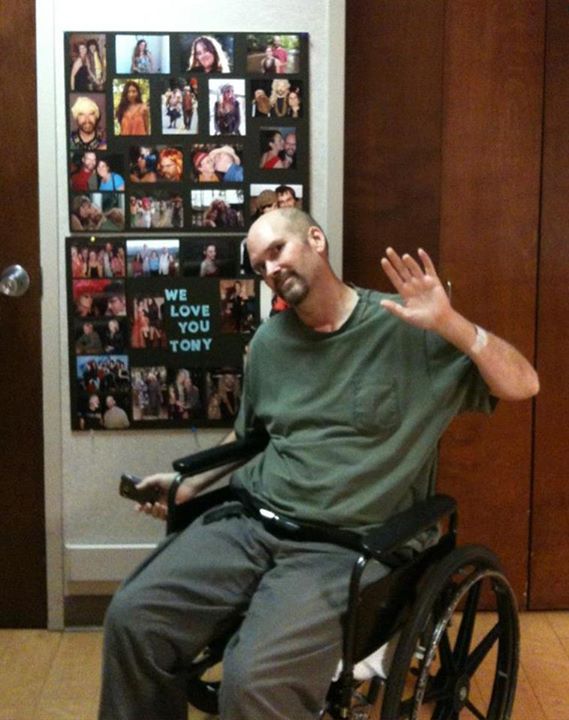
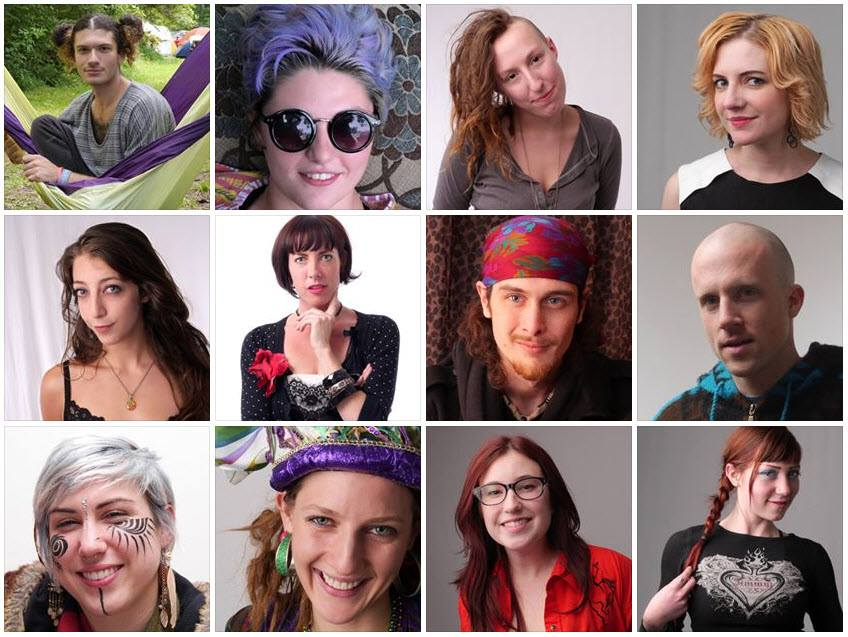
While in the hospital and during my at-home recovery, I got many visits and messages from my friends in Asheville, and my best friend Izzy War made a great big collage of pictures with a lot of my friends and I (pic below). That all made a big difference to me. Seeing that collage reminded me that there was a community out there supporting me, and it helped me keep my frame of reference. It reminded me of the great people I was going to get to see when I got out, and helped me keep going. During my 6 years of physical therapy, I got constant encouragement on my progress and help doing things that I was unable to do, such as grocery shopping, camping at festivals and burns, moving and travel. Thanks Asheville friends!
Family
My brother Tom Rogers flew down from Boston as soon as things got serious, and took care of all the things that I could not. Thank you Tom!
Nurses, CNAs, Physical Therapists, and Occupational Therapists
Physical therapists and nurses were instrumental in my survival and recovery. Doctor’s prescribed the treatments that saved my life, and stopped by now and then and checked on me. However, the nurses were always at my bedside taking care of me, and without them I would have lost any frame of reference and thrown in the towel. It may have been doctors that cured me, but it was nurses, physical therapists and occupational therapists that made me well, and the CNAs (Certified Nurse Assistants) that kept me comfortable, and made it all bearable. Some were better than others, but they were uniformly comforting and encouraging. I tip my hat to them. Thank you! And to any nurses, physical therapists, occupation therapists and CNAs reading this, thank you for your contribution to your community!
Life Before GBS
In August 2010 I was a fun loving retiree burner. I’d been living in Asheville for 3 years, since April 15, 2007. I’d spent my entire life before that in Massachusetts. My life after moving to Asheville was more than a new chapter in my life — more like a new book!
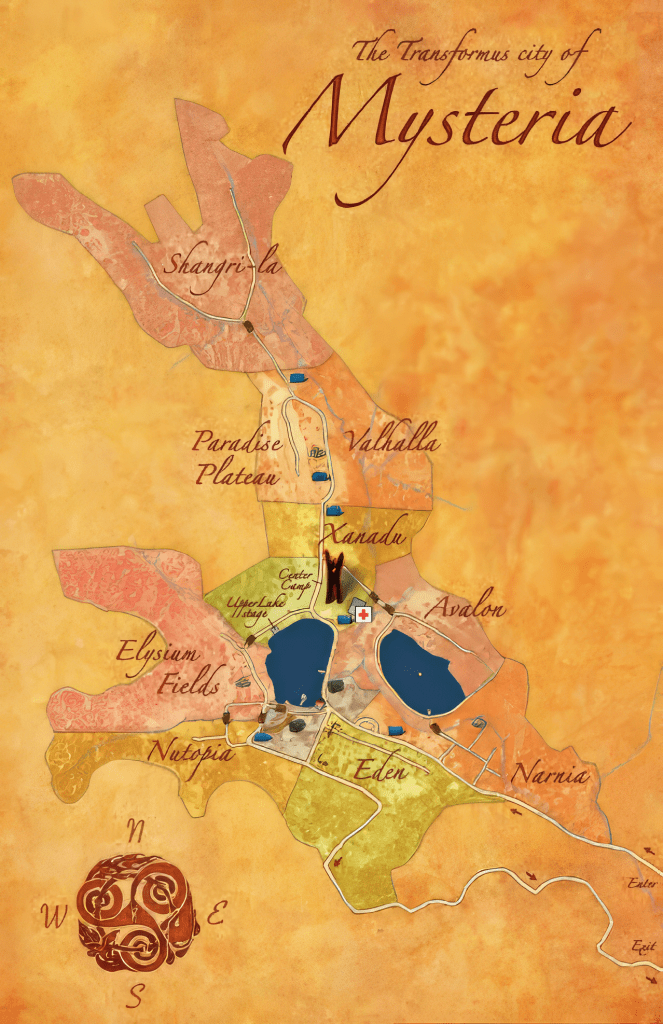
In 2009 I went to Transformus, a regional burn in the mountains outside of Asheville, and that changed my life. It was my first immerisve experience with electronic music, and after that I become a devotee. I also made dozens of new friends, including a lot of people in Asheville that are friends to this day. Thank you for Michella Roche for inviting me! I’d gone to my second Transformus just a month before I got GBS.
I went to what I think was my first Asheville Full Moon Gathering (AFMG) in August 2010, just days before my hospitalization. Camping in the national forest with a hundred Asheville friends and enjoying 24×7 electronic music. After that I went to almost every event they put on, and AFMG became my tribe. Thank you full moon friends!
Getting Sick
Monday 8/23 to Tuesday 8/24/2010 – My symptoms came on incredibly quickly. On Monday and Tuesday I went to the ER twice because I was suddenly having joint pain, mainly in my knees and ankles, and was having trouble walking. They gave me an MRI and other tests, and didn’t find that I was having a stroke or heart attack or any of the other routine conditions they’re taught to screen for. They sent me home with a diagnosis of arthritis and vertigo, and gave me pain killers and instructions to take meclizine, which turned out to be Dramamine. What a joke! Thank you to Jennifer (Nicole Foster) and Ananda Anthony Jones for helping me get the care I needed.
Wednesday 8/25/2010 – I followed up on Wednesday morning by seeing a doctor in the practice where I normally go. I saw Dr. Coin, and she immediately said she didn’t know what was wrong with me, but it was certainly much more serious than vertigo. She was the first person to use the word paralysis, which made things scary right away. She dramatically walked out of her own practice, telling her nurse to cancel all her appointments for the morning, and met me at the hospital and had me admitted.
Diagnosis and Treatment at Mission Hospital
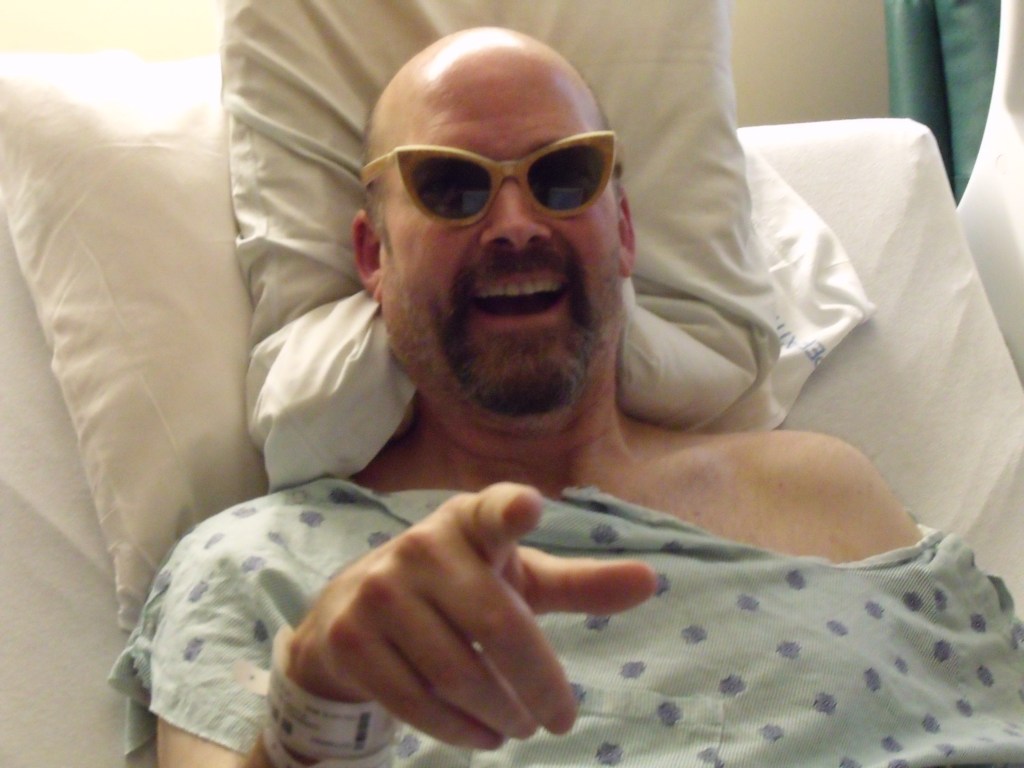
Thursday 8/26 to Saturday 8/28/2010 – I was at Mission Hospital for several days while they tried to diagnosis my problem, and my condition continued to deteriorate. Their “working diagnosis” was an extremely rare illness called Guillain–Barré syndrome (GBS) (pronounced gee-yan-buh–rey), but there were test results that weren’t typical for GBS, so they held off treatment until my entire body was totally paralyzed.
At one point I couldn’t even blink, and fell asleep with one eye open. When I woke up, I found both my eyelids shut and was unable to open them. I couldn’t move, and couldn’t feel my body either — at all. I could see, but I couldn’t move my eyes up and down and side to side. I could hear doctors talking above me, as if I was asleep, and had no way to let them know that I was awake. One doctor said to another “Is he going to live?” Another doctor answered “We don’t even know what’s wrong with him.” Talk about scary!
Shortly after that the paralysis extended to my diaphram, and I went into respiratory distress. My blood oxygen tanked and the alarm went off. “Code blue!” I was at risk of brain damage. Then I stopped breathing entirely. I lost consciousness, which is a good thing, because it means I don’t remember being intubated, which saved my life, but is apparently quite unpleasant.
At the time of my illness I already had a living will and a health care proxy, with my brother Tom Rogers designated to manage my care if I was unable to, and it worked. Tom flew down from Boston to manage things that Saturday morning. Thank you Tom!
My living will said I could only be put on life support if it was part of a treatment plan, so they couldn’t keep me alive just to keep me alive. Tom pushed them to do something. They settled on GBS as a diagnosis, and made a plan to treat me for it, which allowed them to keep me on life support.

Sunday 8/29 to Thursday 9/2 – Once they settled on Guillain–Barré syndrome as my diagnosis they moved me to the neuro-trauma intensive care unit (ICU) and gave me 5 days of intravenous immunoglobulin treatment (IVIG). In IVIG, the patient gets continuous transfusions with a special process that replaces most of your antibodies (white blood cells) with antibodies from plasma from over 1,000 healthy donors. Talk about getting saved by your community! White blood cells live for an average of one year, meaning that for a year after that I had living cells in me from over a thousand people! The plasma alone cost $50,000.
In the ICU they put me into a so-called “drug-induced coma” by pumping me full of barbiturates and benzodiazepines, so my memories are spotty. It’s no longer considered an advisable procedure for anything other than a short list of unusual circumstances, such a brain surgery. If I’d been at Mass General Hospital I doubt they would have done it.)
They also gave me a tracheotomy, which means that a surgeon cut a hole through the front of my neck and into my windpipe (trachea), and placed a tracheostomy tube into the hole for me to breath through. That was connected to a mechanical ventilator that breathed for me, pushing air into my lungs, and then letting it out, without me having to do anything.
While I was in the ICU I suffered from ICU delirium, which is quite serious. I won’t explain what it is, because that would be distressing to read. Click on the word delirium above if you’d like for more information and you’re feeling brave, however I recommend that you just move on to the next paragraph instead.
As the delirium diminished, I once again had the problem of the hospital staff not treating me as an aware human, even though I was conscious and awake. The first movement I became capable of was moving my eyes side to side and up and down. It was a physical therapist that first noticed that my eyes tracked hers, which is an indication of that the patient is no longer comatose. She knew what to say. She told me that I was in Mission Hospital in Asheville (I didn’t know where I was), and that I’d had Guillain–Barré syndrome and been treated for it, and was coming out of a coma. Up to then I had no idea what was going on, so that was a wonderful thing to hear! That was a break-through moment.
At the end of my stay in the ICU they gave me a way to talk. They taught me how to put a special cap (a Passy-Muir valve) on my trach hole, which kept me inhaling with assistance from a mechanical ventilator, but let me exhale through my voice box. I shocked my family with phone calls. It was great to be able to personally let people know that I was on the mend and going to be OK. Suddenly I could also talk to my visitors and the doctors and nurses. That was very different! I never got used to breathing with it though, so I could only say a few words at a time. Like “I’m going to live”, and then I’d pass the phone to someone else.
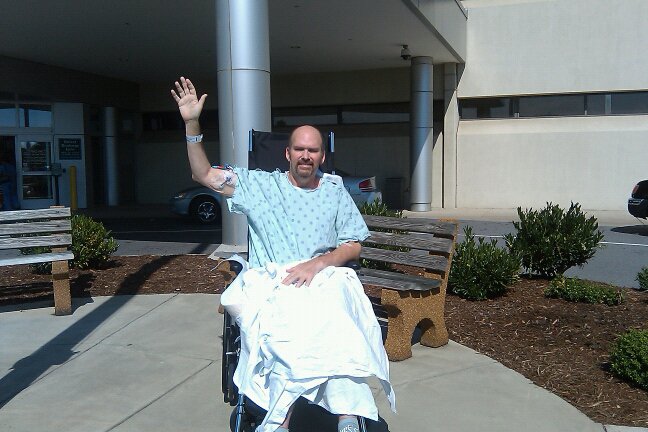
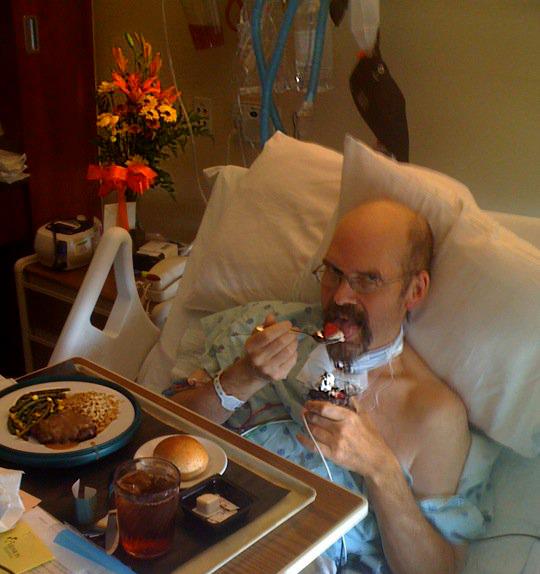
After that I spent a few days in a regular hospital wing. They took out my big plastic tracheotomy tube and gave me a smaller metal one. The next day I passed the swallow test, which is done with a live X-ray. It’s a really big deal. It amazed my doctors that my recovery from paralysis and the induced coma had progressed quickly enough for me to be able to swallow safely. For the first time since my treatment began they allowed me to eat and drink, and stopped tube-feeding me. I had lost 20 pounds in 4 weeks, so they encouraged me to start eating lots. My tracheotomy tube was removed the day before I left the hospital. The hole it left didn’t completely close up until the end of my stay in rehab. Now I have 2 souvenirs. A cool scar at the base of my neck from the tracheotomy, and a second belly button from my surgically implanted PEG feeding tube.
Burning Man
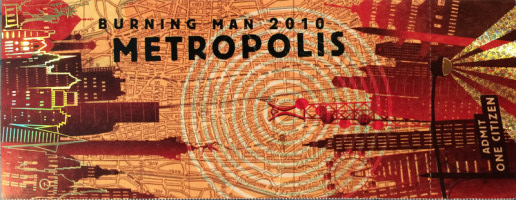
That year I had planned to go to Burning Man. In fact, when I got sick I was all set to get on a plane for Reno, and all my gear had already arrived on the Playa. I missed my plane with the best excuse ever — I was paralyzed and in a coma! Can use imagine a better excuse for missing a flight? My brother Tom sold my Burning Man ticket for me, and got most of the airfare cost refunded.
CarePartners Rehabilitation Hospital
Monday 9/20 to Wednesday 10/6/2010 – After being discharged from Mission Hospital, I was moved to the CarePartners Rehab Hospital in South Asheville for 17 days. I was very impressed by the place, and as far as I’m concerned it’s staffed by angels. Kind-hearted, skilled, and hardworking. Actually all the people that worked with me over the 6 weeks were great, even the doctors.
While at the rehab hospital, I was actually working on two things simultaneously. First was recovering from the damage to my nervous system caused by the Guillain–Barré syndrome, and second, recovering from the muscle atrophy that I had suffered from being both paralyzed and in a coma. GBS damages the myelin sheath on your peripheral nervous system, and when it advances as far it did in my case, damages some of the axon cells in the center of the nerves as well. I could still see and hear only because the nerves for your eyes and ears go directly into your brain — not through the peripheral nervous system. In either case, the body cannot fully repair your nerves, but it was able to repair some of the nerve cells that were no longer functioning — it just took a few years. Overworking the nerves with strenuous activity can actually set back the nerve regeneration process.
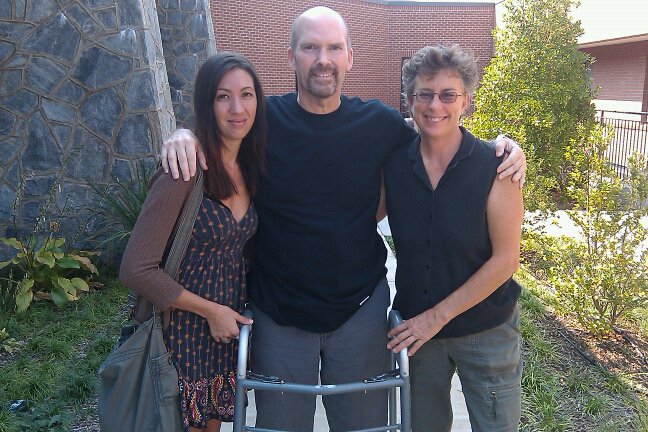
In the rehab hospital occupational therapists taught me how to do daily activities when you can’t walk without a walker. How to fall down, and how to get yourself back up when you do. How to get dressed, how to get in and out of a car (they have a car there just for that), how to load and unload the dishwasher, etc.
Rebuilding your muscles is usually as simple as eating a high protein diet and doing a lot of exercise and stretching, so that was part of my program. However, recovery of my nervous system was the more critical effort, so my therapists were always trying to get me to go easy on my exercises and rest a lot, not work harder. The result was kind of mixed. My nervous system healed some, but I didn’t get to build up my strength as I would have liked because I had to limit my activity and give my nerves tons of rest, so I was very weak.
Home Care
The good people at the rehab hospital didn’t want me to go home to my apartment because it had stairs. I would have had to stay longer, but Amy Kemp let me stay at her apartment for a week. Thank you Amy! Kathleen Riehl Zeren and Misha Falzone took me home and helped get me settled. Thank you Kathleen and Misha!
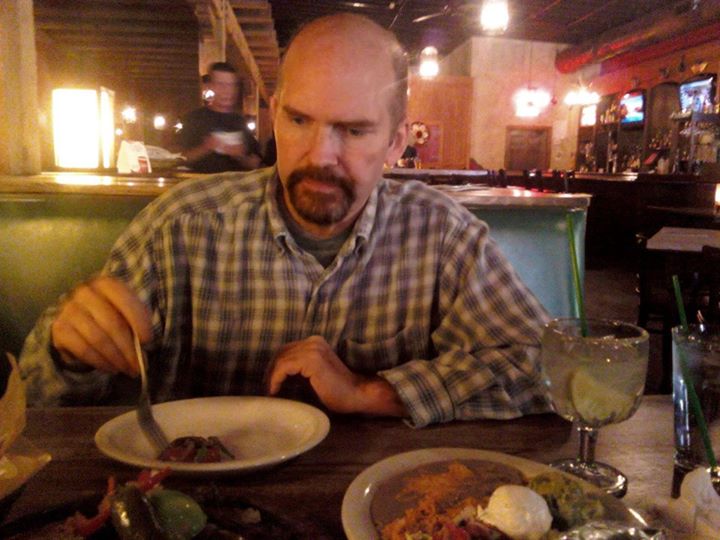
I got excellent home care. For the first few weeks a physical therapist visited me at home 3 times a week, an occupational therapist visited twice a week, and a registered nurse visited once a week, so I got a visit every day of the week. I wasn’t exactly a model patient — I hobbled my way to the Orange Peel (a large Asheville concert venue) with my walker the day after I got out of the hospital — and went to a party at Morgana Somervill‘s that first weekend. I celebrating being alive every day. The doctor’s kept saying my recovery was excellent — “whatever you’re doing, keep doing it” — so I went right back to my wild carefree retirement lifestyle.
After the home-care ended, I got physical therapy on an outpatient basis for a 6 months, daily at first, then 3 times a week, and 2 times a week, and finally once a week. I also got a lot of great help at home from a great CNA. Maria Hileman (now deceased) was my first civilian care-giver. She cleaned my house, did my laundry, took me shopping, etc. We did have fun as well! Katrina Rush visited and kept me company. Thank you, Katrina! Dozens of friends visited, and I started going out a lot. Life started getting fun again!
Health Insurance
Altogether, including follow-up-care, my illness cost around a quarter million dollars in the first year. Thank God I had health insurance! They essentially had a blank check to treat me, and spared nothing to make me well and keep me comfortable. Several people at the hospital told me that I wouldn’t have gotten as good care if I hadn’t had insurance, and then they would have taken all my savings. What a ridiculous system! However, my medical insurance didn’t cover the full cost of my care. They don’t cover the assistance you need in order to survive when you’re disabled, and that was substantial.
Survival, With a Little Help from my Friends
Several months after that I had recovered enough of my nervous system capacity that I was able to walk with a cane, however, for the next six years I flunked every single step in a basic neurological exam. For example I couldn’t take a single step heel-to-toe. I could walk with a cane most of the time, and only needed my walker on occasional bad days, as recently as April 2016, 6 years after illness. There were also occasional good days, when I was able to walk without a cane, and at times I went for several weeks or even months at a time without a cane. However, only the walker would fully protect me falls. With just the cane I still tripped on curbs and needed to hold onto stair railings methodically, and fell often regardless of how careful I was. Every time I saw a doctor they asked how often I fell, and my answer was always 2-3 times a week, meaning that I fell between 100 to 150 times a year, and might have fallen to the floor as many as 1,000 times over the first 6 years after my paralysis. It’s remarkable that I never had a serious injury, such as a broken hip or cerebral hematoma. I think most medical professionals that are familiar with such things would have advised I more conservative, and taken fewer risks during my recovery. However, I was quite eager to get back out into the world and have fun.
Over the time that I was unable to walk without a walker or cane, it wasn’t safe for me to do tasks like cleaning, laundry or grocery shopping on my own. Anything that required carrying something was a challenge. I required someone to help me an average of 10 hours of week. That’s too much to ask from friends, so I tried to pay people $10 to $12 an hour. That wasn’t enough to fully compensate people — I was relying mostly on their generosity — but you can only ask your friends to sacrifice so much.
Once, when I was really having trouble walking, I paid a friend $100 to go to an event with me for just one day, in addition to paying all her expenses, but I was walking so poorly that I needed to lean on someone’s shoulder the entire time, even to pee in the bushes. I figure I spent around $5,000 a year paying people to help me as care-givers. Over six years that added up to at least $30,000, and it might have been twice that. Ouch! It all put quite a dent in my retirement plan.
Thank you, all my Asheville friends, for being so supportive during my 6 year recovery. Without everyone’s encouragement and help I wouldn’t have been able to be as active — getting out and doing things — and without that my recovery would have taken much longer, or never come to be! It’s possible I would have gone to my grave without ever being able to retire my cane. Yup, y’all’s love and support made that much difference!
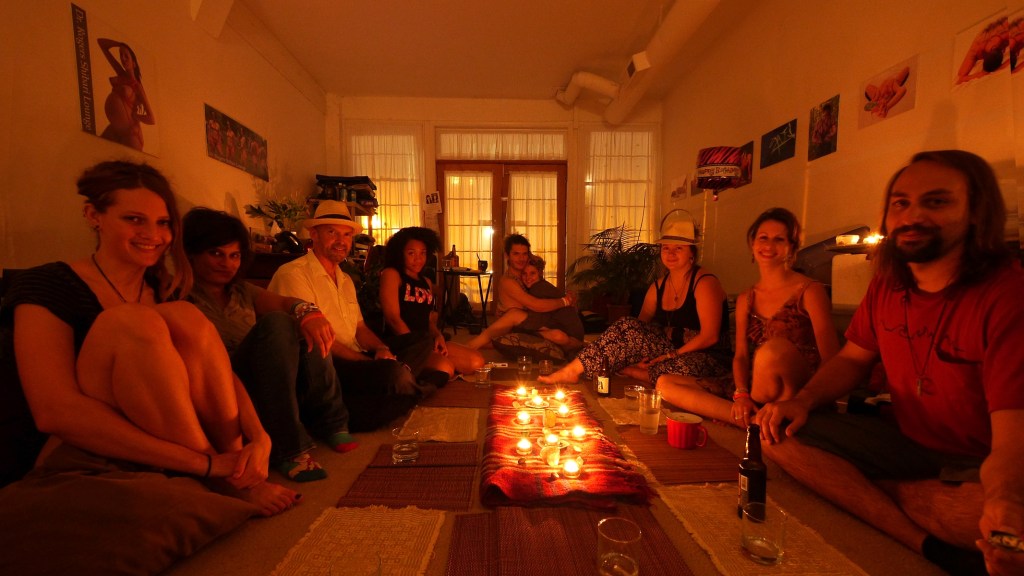
There are too many people to mention, but special thanks to Izzy War, Sprout Love, Rachel Love Leigh, Jennifer Anne Tedder, Jennifer Watt, Victoria Jones, Ada Beta, Riley Holcombe, Logan Fern Noble, Crystal Starre, Ben Marks, Jody Vasquez, Jennifer Ewan, Michella Bella Roche, Victoria Hamby, Carla Adams (now deceased), Faye Monk, and Francesca Jazmin for your help getting by while I was disabled. Many others contributed. I’ll never be able to thank you all enough!
Photography
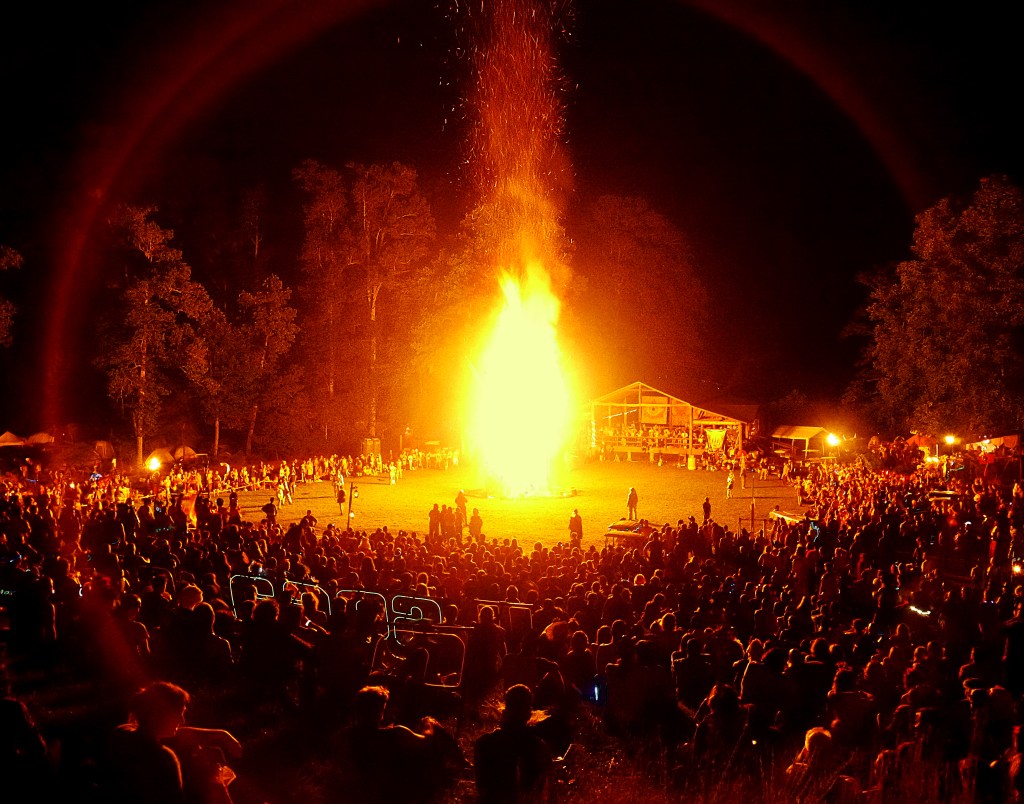
My disability made it difficult for me to continue with photography. It was hard enough for me just to walk with my cane to the top of the hill at Transformus 2012 to take my most popular picture ever — the picture of the effigy burn (below) — and all I brought with me was my camera bag. I could, however, do studio photography, so I focused on that, and got an apartment with a room big enough to use as an in-home studio — 3 Tingle Alley, Apartment A, Asheville NC. That made all the difference. I usually paid an assistant to act as my gaffer for a paid photoshoot. I did a lot of photoshoots for free (like most of my shibari shoots), and still often paid people to help me as gaffers. It was never enough to truly compensate those people for their time and energy — as with the day-to-day help I was getting, I was mostly relying on my friend’s generosity — but it made it hard to operate as a business.
It never seemed to occur to anyone, but I had paralysis in my fingers and hands as well as my feet and legs, so GBS made it hard for me even to use my camera. All those tiny buttons! Tying knots in rope was challenging too, but I looked at it all as good physical therapy. I tried to challenge myself every day.
In the end I gave up on photography — it was just too difficult for me. There were personal reasons as well — doing shibari and photography made my life “too exciting” — and it was all just too much. I ended up selling all my photography and studio gear in 2015 and just calling it quits.
Burns, Gatherings and Festivals
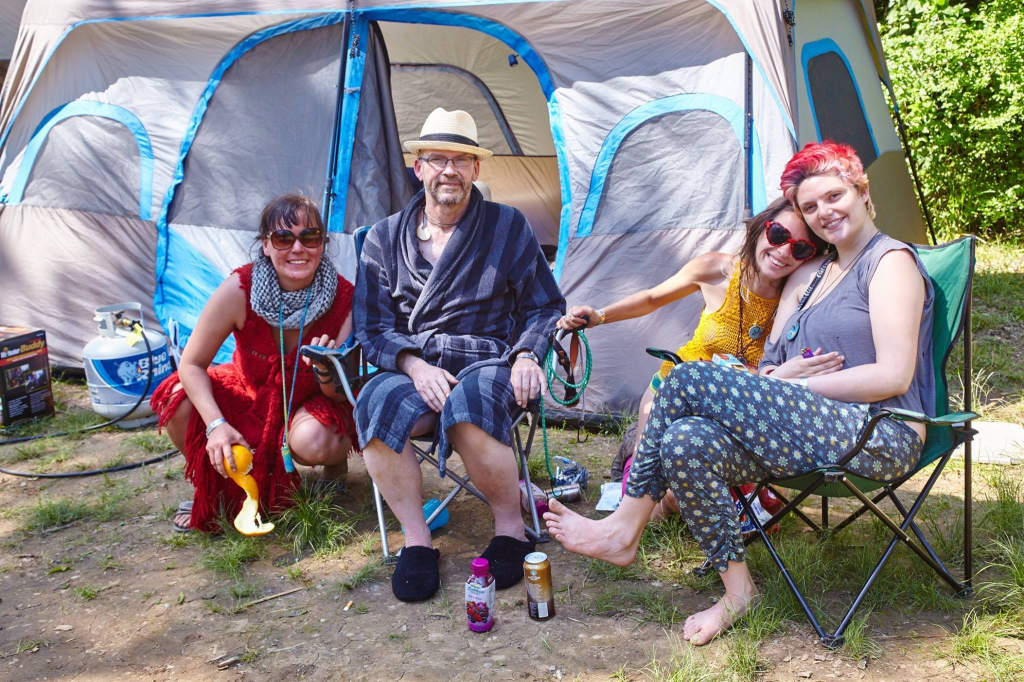
My illness prevented me from going to Burning Man, but over the six years that I needed a walker or cane to get around safely I went to dozens of regional burns, gatherings, and festivals, including just about every event held at Kuykendall and many at Deerfields (in addition to Transformus). One summer I went to 13 weekend music events where we all camped, which means some back-to-back weekends. However, I always needed a lot of help, and after a couple years I figured out that I needed to have 2 assistants to help me with all the things I wasn’t able to do for myself, like carrying my equipment to my camp spot, put up my tent, etc. And I needed a big tent, with a chair inside, because I had so sit on a chair in order to put on my pants. I compensated them by buying their tickets, providing them with transportation, tents, food, etc, and paying their incidental expenses. Once I paid a friend $100, and covered all her expenses, to go to a festival with me for just 8 hours, and that was entirely reasonable, because I was walking so poorly that I had to literally lean on her shoulder the whole time. No one ever got fully compensated for helping me — I was relying mostly on my friends’ generosity — but it was enough to blow my modest retirement budget. I never let my illness stop me from living life to the fullest, regardless of the expense or effort required.
Unfortunately, at Tranformus 2015 I lost my balance, sidestepped more than 10 feet, and fell down a steep embankment into a gully. I bounced off rocks and trees as I rolled to the bottom. I was bruised and scraped, but not injured, however that accident, and the cost of bringing caregivers, was just too much for me, so I sold my entire festival setup, including tents, air mattresses, tarps, etc, and skipped all my regular burns and festivals for the rest of the year. I thought I was done.
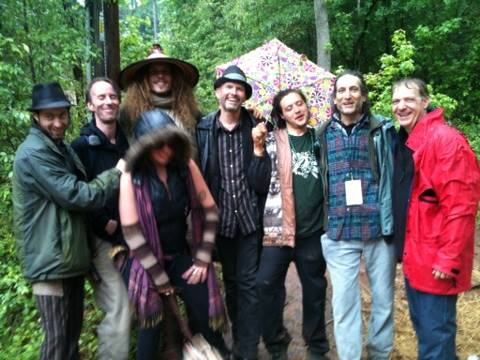
In May 2016, while I was still in physical therapy at Care Partners, and just learning to walk, I felt capable and confident, and went to Ignite, a regional burn in Virginia. I got it done and had a great burn, but with a small but magical bit of help from Abigail Audrey Anniemal. Abby went in a day ahead of me for other reasons, and brought a tent for me with her and set it up in a prime accessible spot, in the woods but right on the path to the sound camps. When I arrived the next day all I had to do was get help hauling my stuff there, and for the rest of the burn I needed very little additional help, and was pretty much independent. After the burn I left the tent there, and Abby broke it down and took it home. Wow, that made it all easy! Thank you Abby, that was awesome! (If you ever want to help someone that’s disabled be able to go to a burn, gathering or festival, do that!).
Dancing
Over the six years that I was unable to walk without assistance I went dancing to electronic music 2 to 3 times a week. I had to keep my cane on the edge of the dance floor, but I was able to dance without it. It may have looked like a miracle to some, but it actually fit with my capabilities. When you’re dancing you’ve got your knees bent, your center of gravity is low, and can use circular motions and get somewhat of a gyroscopic stabilizing effect. While dancing I was frequently losing my balance, but able to catch myself by just putting a foot out in the direction where I would have fallen. Dancing kept me active, gave my heart and lungs exercise, and helped me maintain leg and core body strength.
Thank you to Asheville DJs for all the dancing, in particular my local favorites, In Plain Sight!
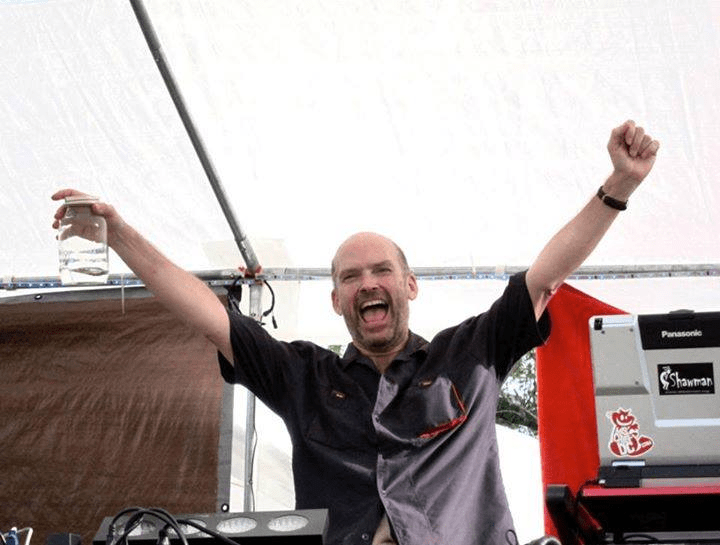
Walking without a walker or cane!
Throughout my 6 years of recovery I had ups and downs, and in March and April of 2016 I was at one of my lowest points. I needed a walker just to get around my apartment, and had great difficulty leaving my apartment. I was basically home-bound. I happened to talk with a friend about it that does at-home occupational therapy, Moni Wack, and she advised me to see my doctor and ask for at-home care, and be assertive about it. I did it, and it worked! Physical therapists starting visiting me at home, and it made a world of difference.
Around a month later I was able to leave my home again, and my new physical therapist decided not to send me back to the small physical therapy clinic that had been taking care of me for 6 years, and instead referred me to the outpatient clinic at the CarePartners rehab hospital.
There, for the first time since leaving the rehab hospital in 2010, I worked with a physical therapist named Travis that was specifically qualified to treat people recovering from systemic nervous system problems, and good at his job. At the end of my evaluation session Travis shocked me by telling me that he knew why I couldn’t walk, knew how to treat it, and that he could have me walking in the woods without a cane in 4 weeks. I was shocked! He told me my problem was damage to my senses, particularly proprioception, rather than a lack of muscle control, which is what I had been told me by physical therapists for 6 years. It all sounded like crazy talk, but I worked at my exercises studiously, and soon was able to walk heel-to-toe on a 4” balance beam with my eyes closed and stand on one foot for a minute.
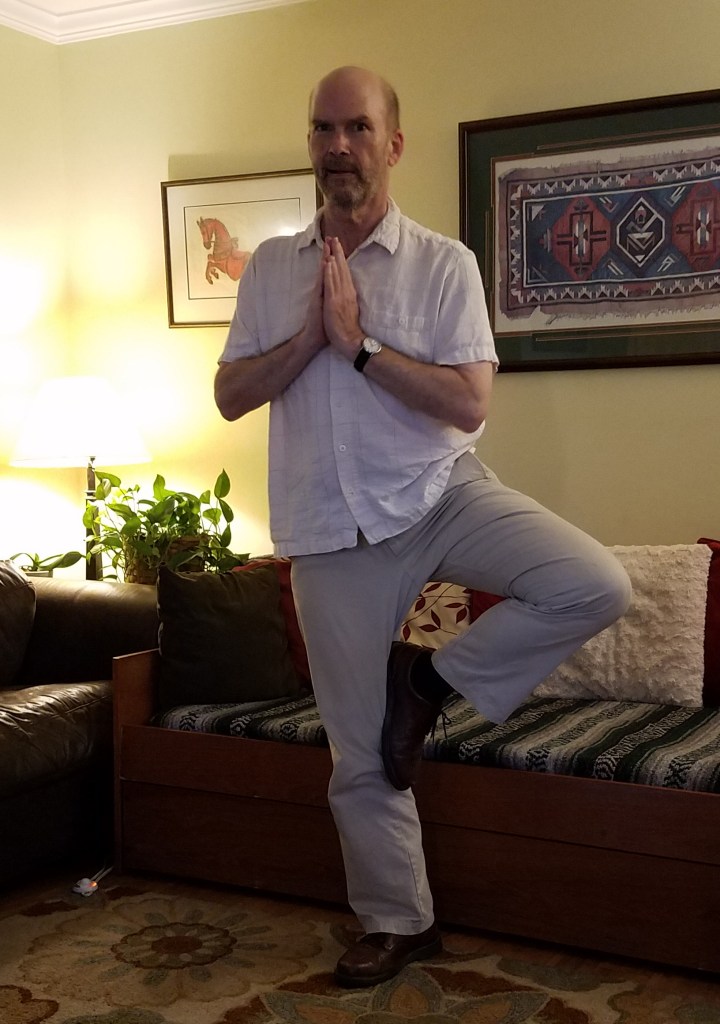
Since June 2016 I have been able to walking amazingly well. I can even pass a field sobriety test. It’s quite difficult, but now I can walk backwards and forwards heel to toe, and stand on one foot until the cows come home. I fallen just a few times, and walking just gets easier and easier. I do still sometimes have bad days when I need my cane, but I’m not complaining. Yay for walking!
A New Chapter of My Life
Now that I can walk well without a cane I can do almost anything without assistance. As I mentioned above, the Ignite burn in May 2017 was my first burn walking without a cane. I packed my own car, carried in all my own stuff, set up my own tent, etc. I was so excited about it that I helped other people unload their cars and carry their stuff!
My new capabilities have opened up a world of new possibilities for me. Not only can I go to festivals and burns on my own, I could also travel on my own. I could do photography and shibari again. The possibilities are endless! And saving a big bucket of money every year is going to be sweet as well.
Getting sick was a drag, but it’s been a pretty good party ever since. Thank you everyone for your help and warm support — it’s meant the world to me!
 Tony Rogers